Target operating model and change intelligence software

See what all your change is doing to your business — live, in one place, without the slide deck.

Every growing organisation runs many changes at once — new systems, processes, restructures, regulatory demands, product launches — all landing on the same teams and the same systems. Stratavue gives your leaders one live view of what all that change is doing to the business, clear enough to open in the room and make the best decisions.
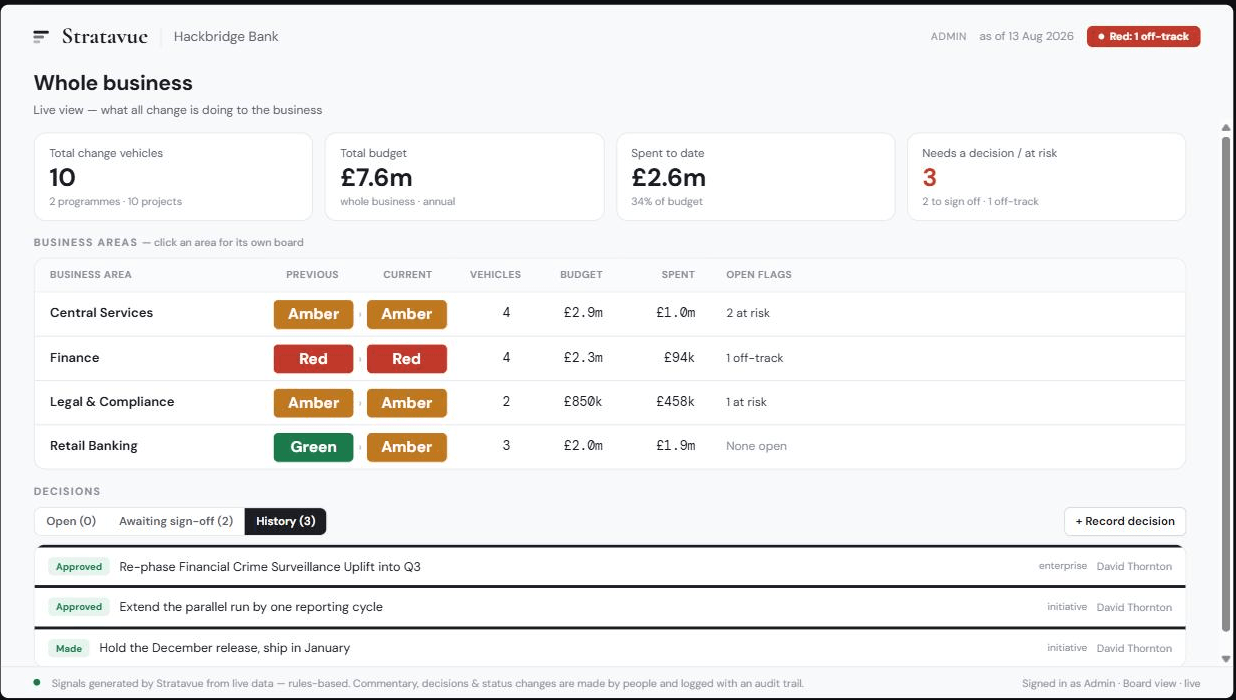
Stratavue Board view — the whole change portfolio on one live screen, business areas rated this period
This period vs lastevery area, rated live
One change needs a decisionderived from the model, not a status column
The problem
A business that never stands stillRegulation, strategy, technology, customers, processes — everything changes at once. By the time you've mapped it, it's moved.
The operating model stops being trueIt was right on handover day. Twelve months later it describes a business that either moved on without it, or never moved at all.
A live business, run from static slidesStrategy decks, spreadsheet trackers, quarterly reviews — all out of date the moment they're shared. Your business has no live home.
Getting startedThe gamechanger: let AI map your business.Describe your business in plain English and AI drafts a first version of your model in minutes — your team refines it, imports from CSV, or starts with one business area and expands from there. No month-long modelling exercise before you see value, and hands-on setup support is available if you want it.
AI-generated starting modelCSV importStart with one area, expand from there
How it works

Map what you have. Set where you are going. Hold every change against it.

Seven steps, and it is a loop rather than a project — because it is all one model, doing four jobs.

  • Your current operating model Business areas, capabilities, processes, systems and the journeys your customers take — held once, in one place, instead of in six decks.
  • Your target operating model Written as changes against that model rather than as a separate document, so the target is always readable against today and never quietly drifts out of date.
  • What every new change is tested against Before a project is committed, what it walks into: who is already carrying that work, what it collides with, which part of the target it delivers.
  • What tells you whether you got there Attainment read from the live model and what delivery has actually done to it — not typed into a status column.
Advances on its own · click a step to hold it
Map what you haveStep 01
State the target as changesStep 02
Test and connect the workSteps 03–05
Run it, then read the varianceSteps 06–07
Step 1 of 7
RETAILPAYMENTSRISKOBJECTIVESVALUE STREAMSORG UNITSSUB ORG UNITSCAPABILITIES31PROCESSESSYSTEMS
TODAY’S MODELTARGETReal-time paymentsADDCustomer OnboardingCHANGELegacy mainframeRETIREPublished v3 · v2 · v1 — every version kept, field-level diff between any two
Before you create this projectChecked against what is already in flight. Nothing has been created yet.3 other projects already land on OperationsTakes the cycle £120k over its envelope2 deadlines fall within the same monthWho else does this land on?ClaimsGroup LegalCustomer Svc
One project with its capability, process, system and customer-journey impact listed and traced
JFMAMJJASONDReg Reporting134555422~22Operations12333331111~40Group Legal21~12Group Legal — 12 people, 2 cutovers in NovemberNothing all year, then both at once. Moving one is cheaper than what follows.
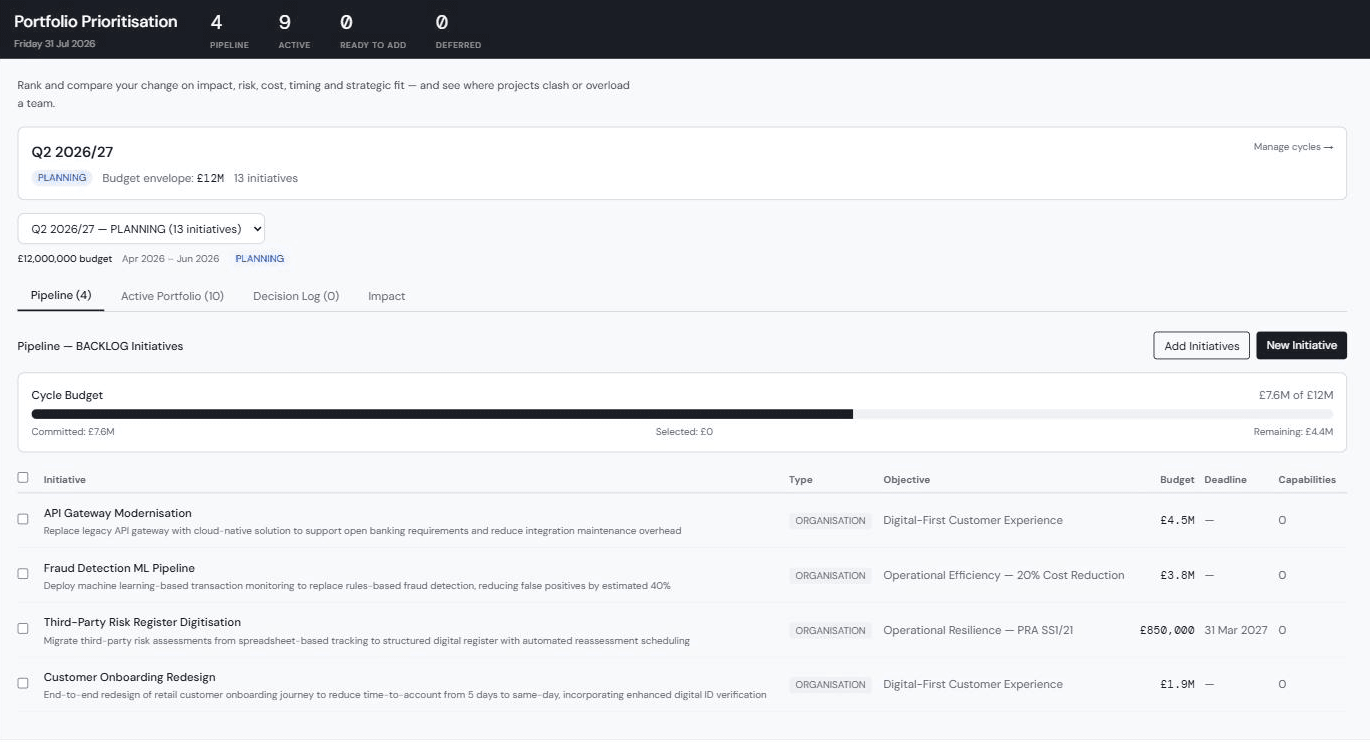
A planning cycle backlog against its budget envelope, each project with its priority score and the four things driving it
PROGRESS AGAINST THE TARGETRetire legacy mainframeSystem marked retired in the live modelMETAdd real-time payments2 projects delivering against itIN PROGRESSOperations to 40 FTEStratavue holds no headcount — a human confirms this oneNEEDS REVIEWNothing counts as met until the model shows it, or somebody says so on the record.
The board view

The picture your executives open in the meeting, instead of the pack somebody spent three days assembling

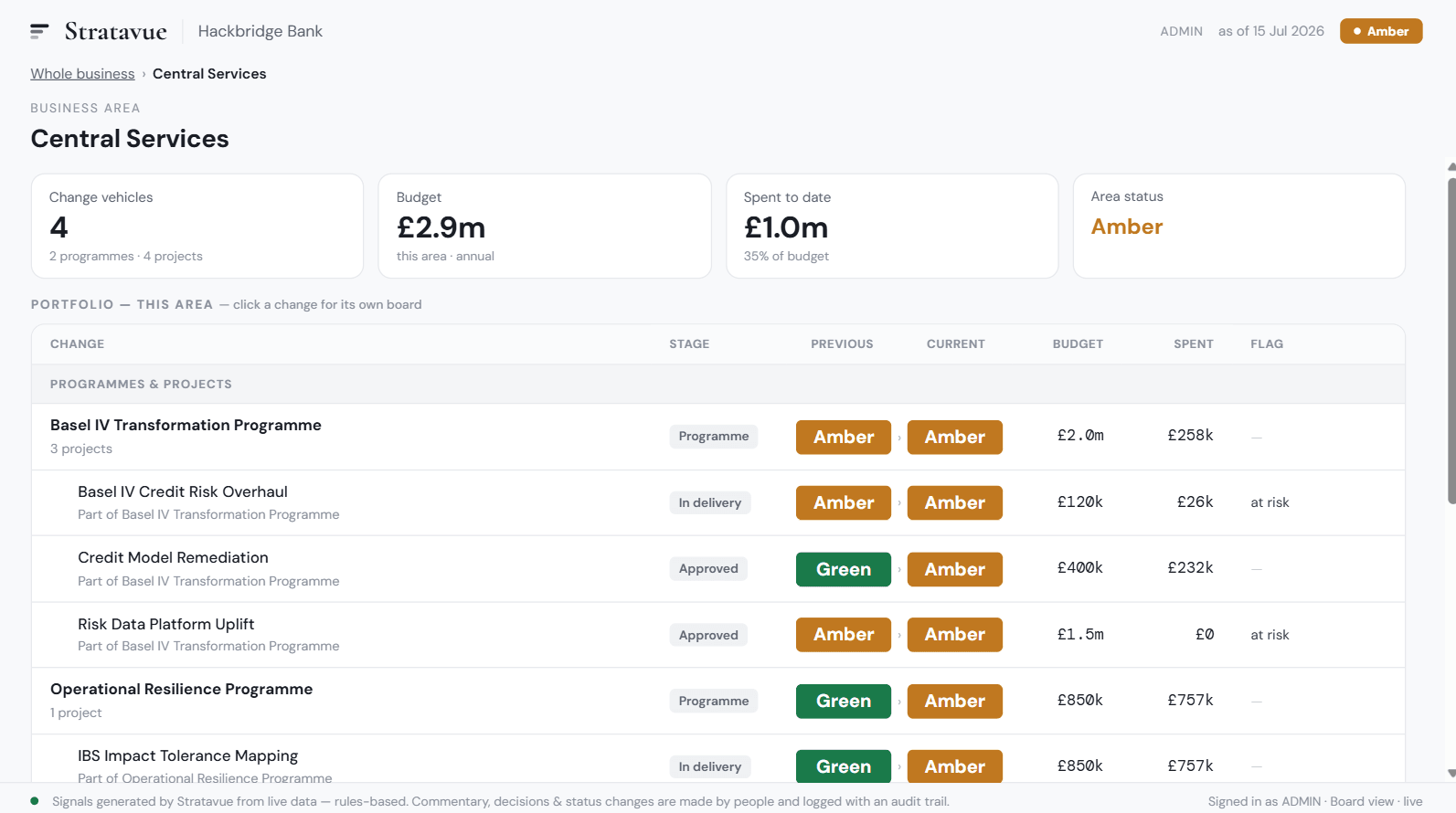
Whole portfolio, cost and spend, and the one change that needs a decision this month. Drill from the whole business into a single area, then into one project’s health — delivery, schedule, budget and collisions.
Advances on its own · click a step to hold it
Step 1 of 5
Exec dashboard — whole change portfolio
Business area drill-down
CHANGEOne projectCapabilitiesProcessesSystemsCustomers
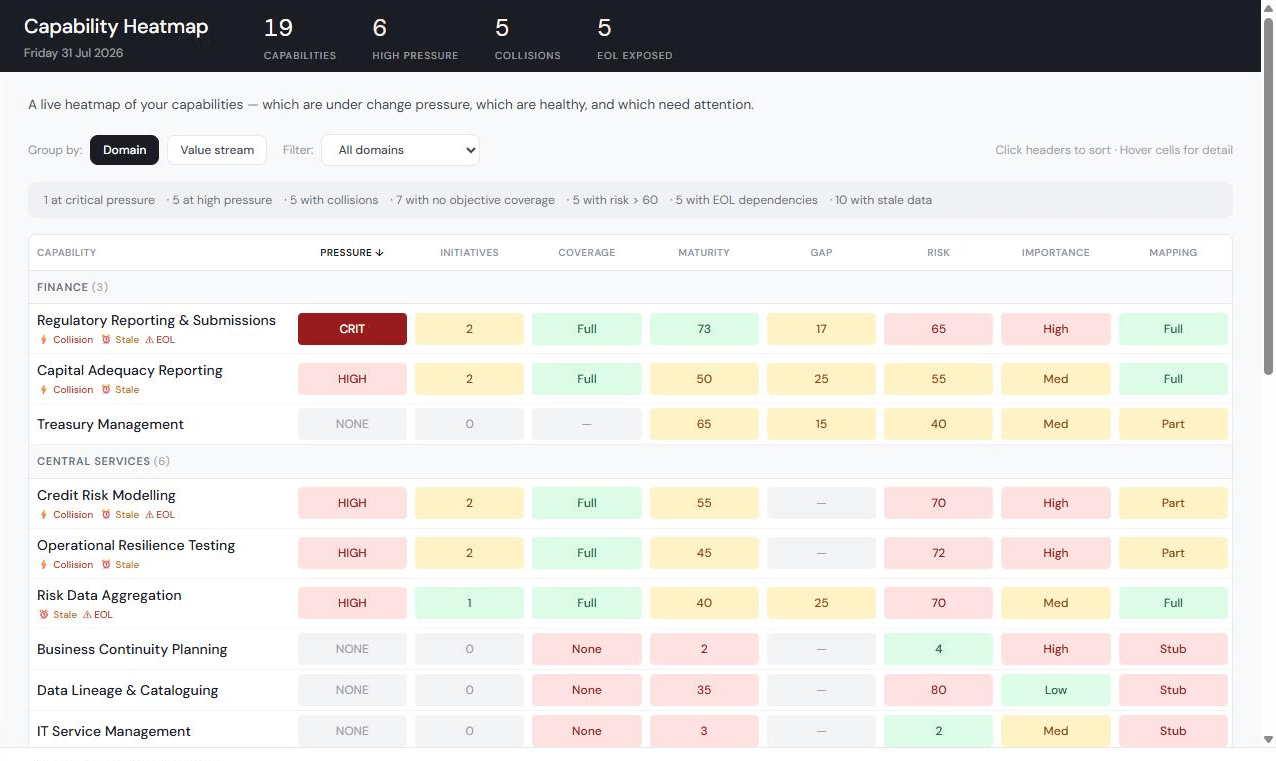
Nineteen capabilities scored for change pressure, with collision, stale-data and end-of-life flags, and columns for maturity, gap, risk and mapping coverage
Decision recordedSIGNED OFF
Sequence Payments migration behind OnboardingCollision accepted with a reason on the record — Onboarding ships first, Payments follows in Q3.Risk accepted
Raised by A. Chen · Head of ChangeSigned off by J. Okoro · COOLogged to the audit trail · 15 Jul 2026, 14:32

Decisions made in the room — with an audit trail

NEW

Execs and change leads make portfolio-cycle decisions together. Every change carries its own live health — delivery, schedule, budget, and collisions. Attainment is derived from the model and what delivery has actually done to it, rather than typed into a separate status column. Where someone asserts a change is met, the record says so.
Advances on its own · click a step to hold it
Step 1 of 4
A planning cycle’s backlog against its budget envelope, each project with its priority score and the four things driving it
CHANGEPayments migrationCHANGEOnboarding redesignCAPABILITYCustomer Onboarding
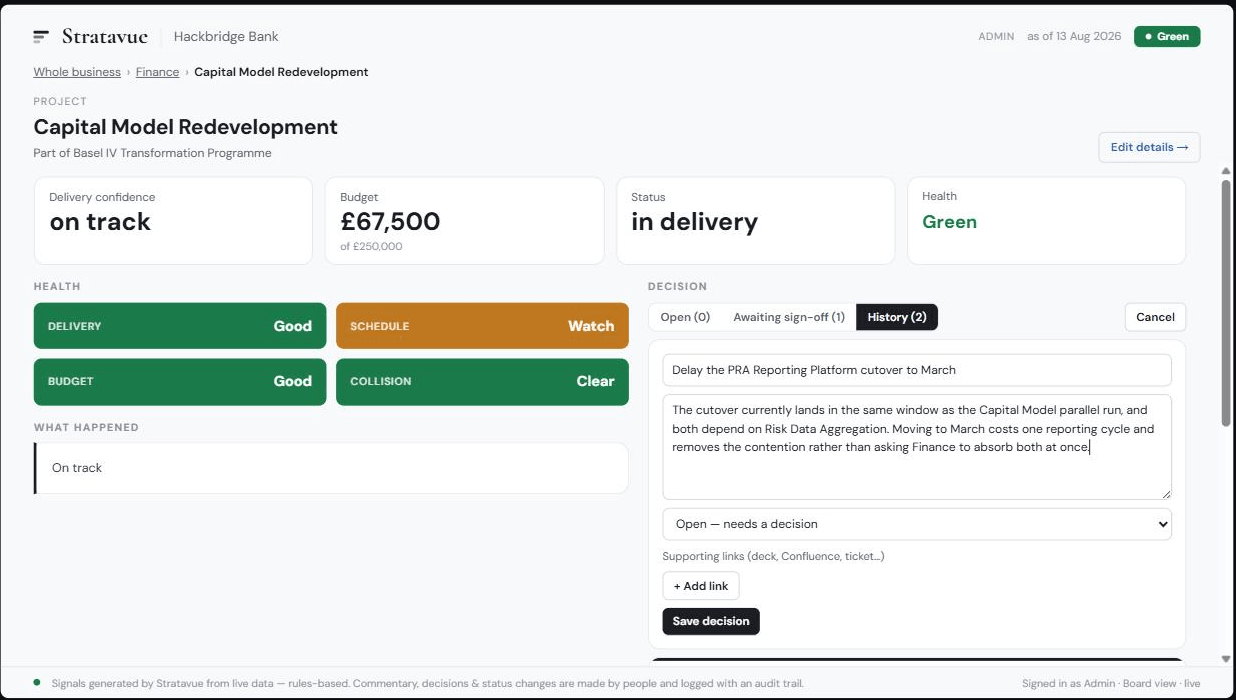
A decision being raised on a project record — title, rationale and outcome, with one already awaiting sign-off and two in the attributed history behind it
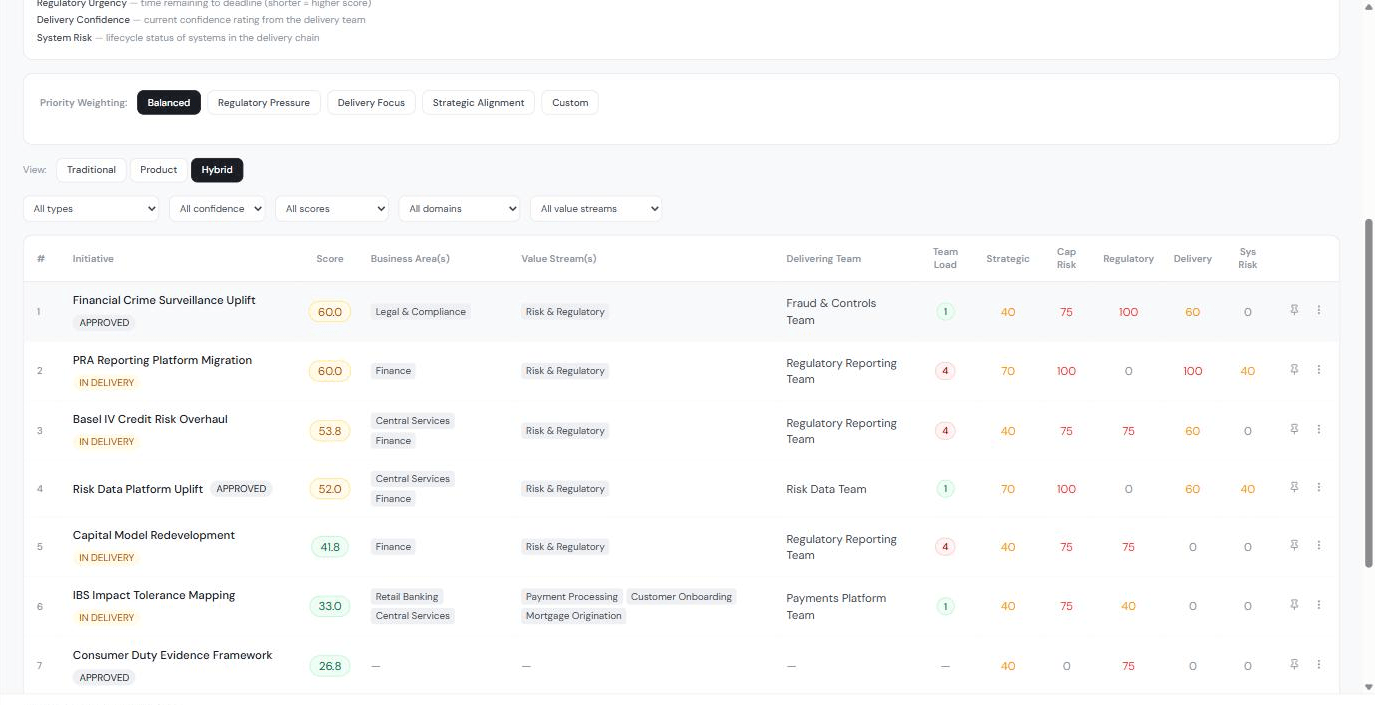
The active portfolio inside a planning cycle — ten projects with business area, delivering team and team load
Decisions stay where they were madeRaise a decision in the room, or request sign-off from a leader before it is final. Accept a clash with the reason on the record. Every decision carries who made it, when and why — an append-only trail rather than a slide that superseded another slide.
Your judgement wins. A supplier goes quiet, a regulator moves a date — you mark the project at risk, and nothing takes it back. Not even tomorrow’s import: an import only updates the columns your file contains, so what you set here stays set.
Change impact assessment, live

Cut 4 weeks of project discovery to 4 minutes.

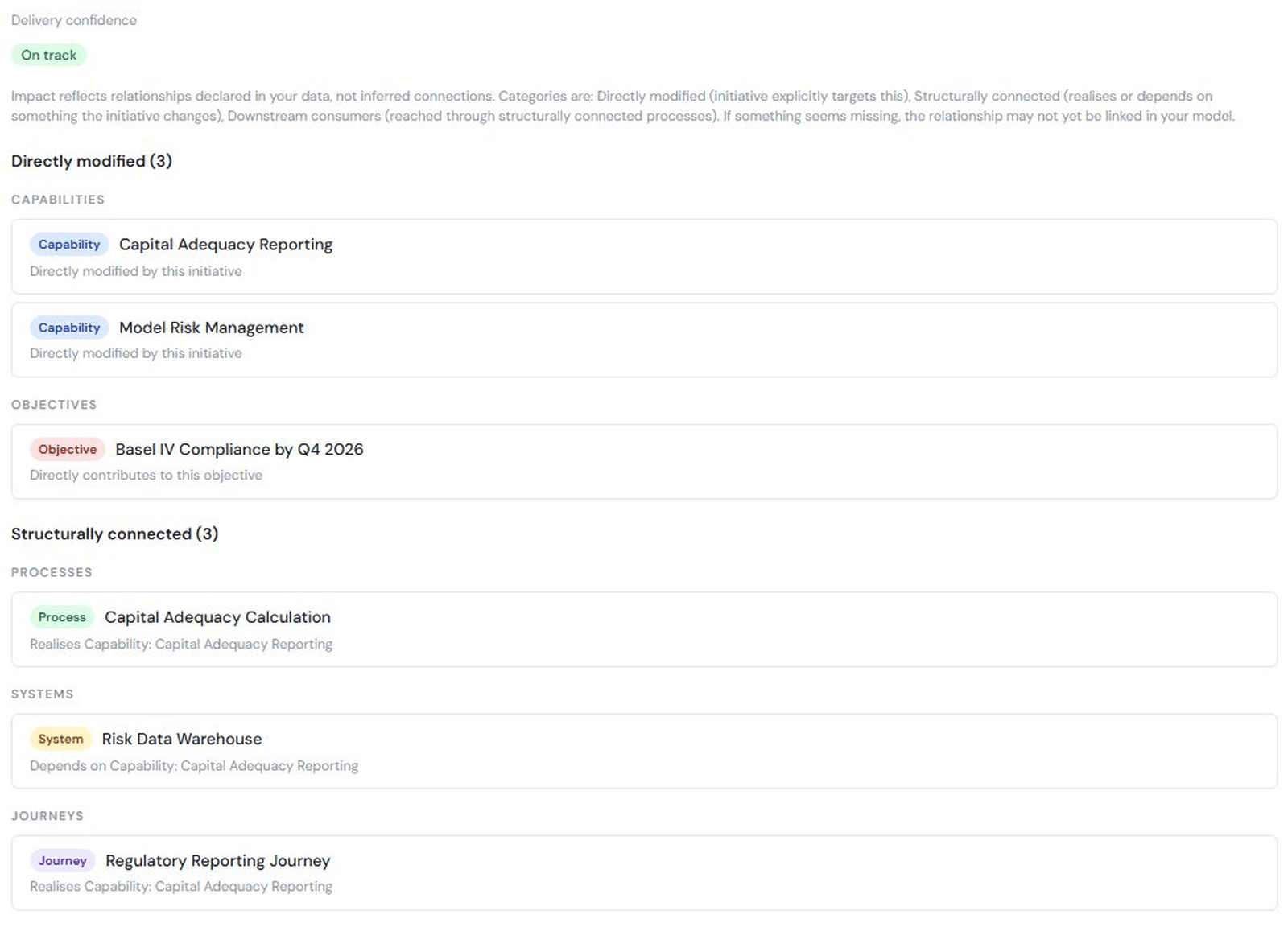
Traditional change programmes burn weeks of business-analyst time mapping what a project will touch — capabilities, processes, systems, regulatory objectives, customer journeys. Stratavue holds it all in one model. Click any project and see exactly what it directly modifies, what it structurally connects to, and what your customers experience downstream — instantly. Reduced discovery phase. No workshop chains. No spreadsheet trawl.

RetailPaymentsRiskCapabilitiesProcessesSystems
Live impact across capabilities, objectives, processes, systems, and customer journeys — declarative, traceable, audit-ready.
Where it fits

Stratavue isn't here to replace what you have.

Use it on its own, or alongside what you already run. For teams without a heavy toolset, it's all you need. Already using project management, enterprise architecture or document tools? Keep them — bring your existing structure in, and link straight out to the documents and records that live there. Stratavue stays the layer above, showing the whole picture, live. It answers a different question.

Project and portfolio toolsThey track work, and they do it well — a project is amber and due in March. They hold no model of your business, so they cannot tell you what that project changes or who else is changing it.
Enterprise architecture platformsThey hold a model, usually of the technology estate, and are priced and staffed for organisations with an architecture function. They are not built to be opened in a change board.
StratavueA model of the business, the change portfolio running against it, and the target you are trying to reach — in one place, readable by the people who have to answer for all of it.
Built for complex, governed organisationsFor organisations where change has to be governed — insurers, payments, wealth, financial services, and adjacent regulated sectors like healthcare, housing, and higher education.
Capability maturity scoring aligned to operational resilienceObjective tracking with gap detection against obligations and commitmentsEvidence governance with verification flows and supersession audit trailDeadline monitoring with automated weekly alerts
For example, for UK firms regulated by the PRA and FCA, Stratavue speaks directly to the PRA's January 2026 Dear CEO letter:“Senior managers and boards should routinely consider how strategic changes affect resilience.”
PricingScoped to your organisation, and priced with it. Pricing scales with scope, not seats.
CoreEvery part of the organisation, in one live picture.Contact usFor many programmes, teams and areas.
Every change your business is making, in one live pictureWhat each change touches — the teams, processes and systems behind itWhere two changes collide, before they landUnlimited business areas, programmes and teams
See plans
EnterpriseCore, plus integration and support.Contact usAPI + onboarding support.
Everything in CoreAPI to your existing toolsOnboarding support
See plans
Looking for a project tool with the business map? See Stratavue for Teams →
Ready to see the full picture?Forty-five minutes with the founder. Your business on screen by the end of it.
Book a demo